
Tag Archives: relationship counseling

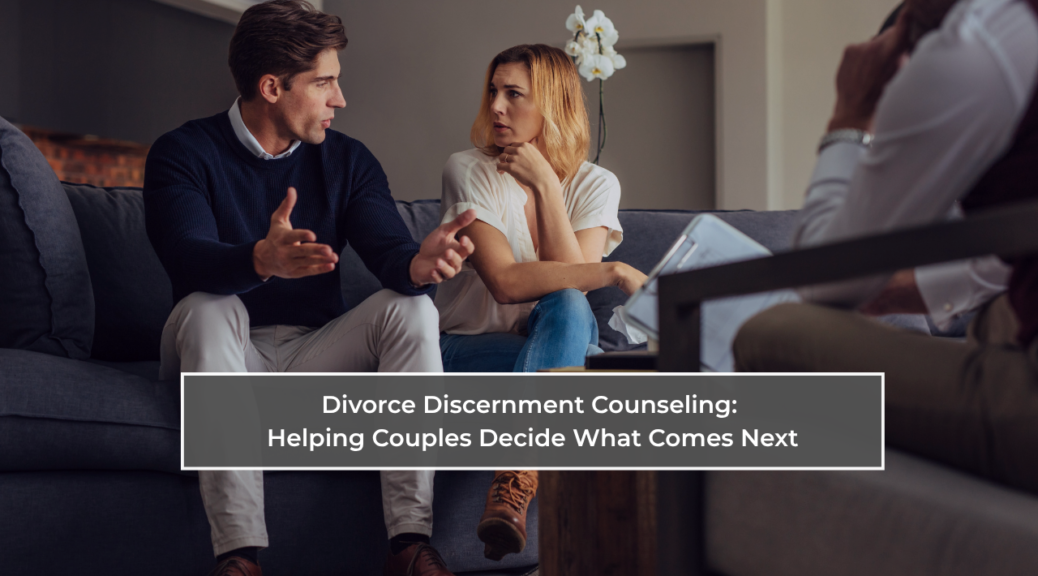
Divorce Discernment Counseling: Helping Couples Decide What Comes Next

When a marriage reaches a point where divorce is being seriously considered, knowing what to do next can be difficult. One partner may feel ready to leave while the other still hopes to rebuild the relationship.

In other cases, both partners may feel emotionally exhausted but remain unsure whether ending the marriage is the right decision. Divorce discernment counseling gives couples an opportunity to step back from that uncertainty, understand what is happening in the relationship, and thoughtfully consider their options.

Divorce Discernment Counseling Explained

This type of counseling is a focused counseling approach for couples who are unsure about the future of their marriage. Rather than beginning with the assumption that the relationship must be repaired, the process centers on helping both partners gain a clearer understanding of their situation and decide which direction makes the most sense.

For example, one spouse may feel that years of unresolved conflict have made divorce necessary, while the other believes the relationship still has the potential to improve. Discernment counseling allows both perspectives to be examined without requiring the couple to make an immediate final decision.

How is Discernment Counseling Different From Couples Therapy?

The biggest distinction lies in the purpose of the work. Couples therapy typically assumes that both partners have chosen to work on their relationship and focuses on issues such as communication, emotional connection, conflict, trust, or intimacy.

Traditional couples therapy generally focuses on improving the relationship by addressing communication problems, conflict, trust, intimacy, or other relationship challenges.

Discernment counseling begins with a different question: Should we try to repair this relationship, or should we move toward ending it? AThe counselor remains neutral about the outcome and helps the couple examine their situation without pushing them toward either choice.

Who Can Benefit From Discernment Counseling?

A couple might seek discernment counseling when:

  • One partner is considering divorce while the other wants to continue the marriage.

  • Both partners feel uncertain about whether the relationship can be repaired.

  • Repeated conflicts have left the couple unsure where to begin.

  • They want greater clarity before committing to divorce or intensive couples therapy.

The goal is to understand the relationship and the decision more fully before choosing a direction.

What Happens During Discernment Counseling?

Sessions typically provide opportunities for both partners to discuss their individual experiences. The counselor may explore what each person believes has gone wrong, what they still value in the relationship, and what would need to change for reconciliation to feel possible.

This individual perspective is important because couples can experience the same relationship very differently.

The counselor may also explore the history of the relationship and the major events or patterns that contributed to the current crisis. Looking at these issues can help couples distinguish between long-standing concerns and problems that may have intensified more recently and provide useful context for evaluating whether meaningful change is possible.

What Happens After Discernment Counseling?

The next step depends on the couple’s decision.

Discernment counseling generally helps couples consider three broad directions:

  1. Continuing toward divorce
  2. Maintaining the current situation while gaining more clarity
  3. Committing to focused couples therapy to work on the marriage

Those who choose to work on the relationship may transition into traditional couples therapy with specific goals for rebuilding the marriage. Others may decide that separation or divorce is the appropriate path.

How CCHC Can Help Couples Through Divorce Discernment Counselling

The Center for Connection, Healing, and Change (CCHC) supports couples who are struggling with uncertainty about the future of their relationship, including those considering separation or divorce. If you are unsure about ending your marriage or want greater clarity before deciding whether to pursue couples therapy, CCHC can help you approach this important decision with greater understanding and intention.

Schedule a free consultation with us today, or visit our offices in Woodbridge or Fairfax
Premarital Counseling and Emotional Foundations: Building a Stronger Marriage Before It Begins

A wedding is a significant milestone, but marriage involves the everyday decisions, conversations, and experiences that follow. Premarital counseling and emotional foundations help couples strengthen communication, trust, emotional awareness, and shared expectations to building a relationship that can adapt as life changes.

This gives partners practical tools for navigating challenges and building a connected, resilient relationship.

What Is Premarital Counseling?

Premarital counseling provides couples with a structured space to explore the skills, expectations, and emotional patterns that shape their relationship. Sessions can address communication, finances, family dynamics, intimacy, career goals, parenting, and other areas that may influence married life.

Counseling also gives couples an opportunity to recognize their strengths and identify areas that deserve attention. Having these conversations before marriage can create greater clarity and help partners approach their future with confidence.

Couples may explore topics such as:

  • Financial priorities and spending habits

  • Household responsibilities and family expectations

  • Career plans and work-life balance

  • Children and parenting preferences

  • Personal values and long-term goals

Discussing these subjects openly helps partners understand each other’s perspectives and establish realistic expectations.

How Emotionally Focused Therapy Strengthens Relationships

Emotionally Focused Therapy (EFT) can be a valuable approach within premarital counseling. It focuses on the emotional connection between partners and helps them recognize the feelings and needs influencing their interactions.

A disagreement about finances, for example, may involve deeper concerns about security, trust, or feeling understood. Identifying those underlying emotions can help couples communicate with greater empathy and respond to each other more effectively. These skills contribute to a stronger emotional bond and a greater sense of security within the relationship.

The Emotional Foundations Every Marriage Needs

Healthy marriages depend on emotional foundations that support connection during both comfortable and challenging seasons.

Couples benefit from learning how to communicate honestly, manage disagreements, understand each other’s needs, and make decisions as a team.

1. Building Trust Through Open Communication

Trust develops through consistent communication and emotional safety. Premarital counseling helps couples practice expressing concerns clearly while listening with genuine attention.

Important communication skills include:

  • Discussing concerns before they build into resentment

  • Listening to understand a partner’s perspective

  • Expressing emotions respectfully

  • Acknowledging feelings even when opinions differ

These habits make difficult conversations easier to approach and help both partners feel heard and valued.

2. Aligning Expectations, Values, and Future Goals

Couples can share strong feelings for each other while holding different assumptions about married life. Expectations surrounding money, careers, family traditions, household roles, and children can become significant relationship issues when they remain unspoken.

Premarital counseling creates space for these conversations. Couples can identify shared priorities, acknowledge differences, and make thoughtful decisions about their future together.

Why Premarital Counseling Is Worth the Investment

Preparing emotionally for marriage gives couples skills they can continue using throughout their relationship. Counseling can be especially valuable for developing healthy approaches to conflict and maintaining emotional connection.

1. Developing Healthy Conflict Resolution Skills

Disagreements are a normal part of close relationships. The quality of a marriage is influenced by how partners handle those moments.

Counseling can help couples recognize unhelpful communication patterns and develop healthier ways to address disagreements. They learn to remain engaged during difficult conversations, express concerns constructively, and work toward solutions that respect both partners.

2. Strengthening Emotional Connection for the Long Term

Emotional connection requires ongoing attention. Understanding a partner’s needs, offering support during stressful periods, and making time for meaningful conversations all help maintain closeness.

When couples develop these habits before marriage, they enter married life with a stronger understanding of how to support one another. This is a central benefit of premarital counseling and emotional foundations: building relationship skills that remain useful as circumstances change.

Getting the Most from Premarital Counseling

Couples gain more from counseling when they approach sessions with honesty, curiosity, and a willingness to participate. The goal is meaningful conversation that can translate into everyday relationship habits.

Partners can prepare by discussing their hopes, concerns, and expectations honestly during sessions and continuing important conversations at home. Practicing communication skills between appointments helps turn new insights into lasting habits.

Premarital counseling and emotional foundations give couples an opportunity to build trust, communicate more effectively, understand each other’s needs, and prepare for the realities of married life.

Ready to build a stronger foundation for your marriage? Schedule a free consultation with us today, or visit our offices in Woodbridge or Fairfax.